

Mental health is not just in your head.
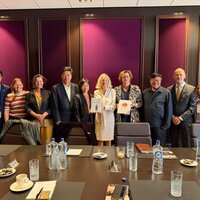
Reflection on the WTMF Congress 2026
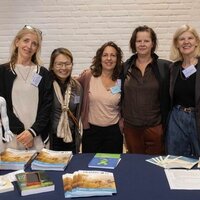
First Dutch Congress on Integrative Oncology: Knowledge, Research, and Collaboration

Autumn: Making Space and Letting Go
Sustainable Living with Yourself: What Can We Learn from the Seasons?

Acupuncture in motion: WHO puts traditional medicine more firmly on the agenda (2025–2034)
Traditional medicine is, for many people worldwide, a natural part of healthcare. At the same time, there has been debate for years: what truly works, when is it safe, and how do we prevent people from getting lost between well-supported care and unproven claims? In this tension, the World Health Organization (WHO) has now taken a clear step.
The WHO has adopted a new Global Traditional Medicine Strategy 2025–2034. With this strategy, the WHO does not aim to “simply promote” traditional, complementary and integrative care (which can include acupuncture), but rather to better organise it—placing greater emphasis on evidence, quality, safety, and responsible integration into healthcare systems.
What does the WHO strategy broadly focus on?
In plain language, the strategy comes down to four main ambitions:
- More and better research into effectiveness, mechanisms of action and appropriate use.
- Safety and quality: clear standards, stronger regulation, and attention to education and competencies.
- Appropriate integration where it makes sense: not “everything everywhere,” but careful implementation and collaboration with conventional healthcare.
- Looking beyond healthcare alone: the WHO also highlights social and economic aspects, such as access and culture.
In December 2025, the WHO reinforced this direction with initiatives around knowledge-sharing, including the launch of a Traditional Medicine Global Library—a step to make information and evidence more accessible worldwide.
What does this mean for acupuncture?
The WHO wants traditional care not to “float” alongside conventional healthcare, but to be supported by clear agreements on quality and safety. This includes solid education, careful application, and honest information about what is—and is not—known from research.
For the NVA, this is recognisable: we work with quality requirements and encourage good collaboration where it is in the patient’s best interest.
What is outlined in that WHO strategy in broad terms?
In plain language, the strategy boils down to four major ambitions:
- More and better research into effectiveness, mechanisms of action, and appropriate application.
- Safety and quality: clear standards, improved regulation, and attention to education and competencies.
- Appropriate integration where meaningful: not 'everything everywhere', but carefully and in collaboration with mainstream healthcare.
- Looking beyond just healthcare: the WHO also mentions social and economic aspects, such as accessibility and culture.
In December 2025, the WHO reinforced this movement with initiatives around knowledge sharing, including the launch of a Traditional Medicine Global Library: a step to make information and scientifically supported knowledge more accessible worldwide.
What does this mean for acupuncture?
The WHO wants traditional care not to 'float' alongside conventional care, but to have clear agreements on quality and safety. Think of good education, careful application, and honest information about what is and isn't known from research.
For the NVA, this is recognizable: we work with quality standards and encourage good cooperation when it is in the patient's interest.
Sources:
- WHO - Global traditional medicine strategy 2025–2034 (publication page)
- WHO - Traditional medicine strategy 2025–2034 (background page WHO Global Traditional Medicine Centre)
- WHO (IRIS) - document (PDF/bitstream)
- PAHO/WHO - WHO launches the Traditional Medicine Global Library (19 Dec 2025)
- The Lancet - article on adoption of the strategy (31 May 2025)
