
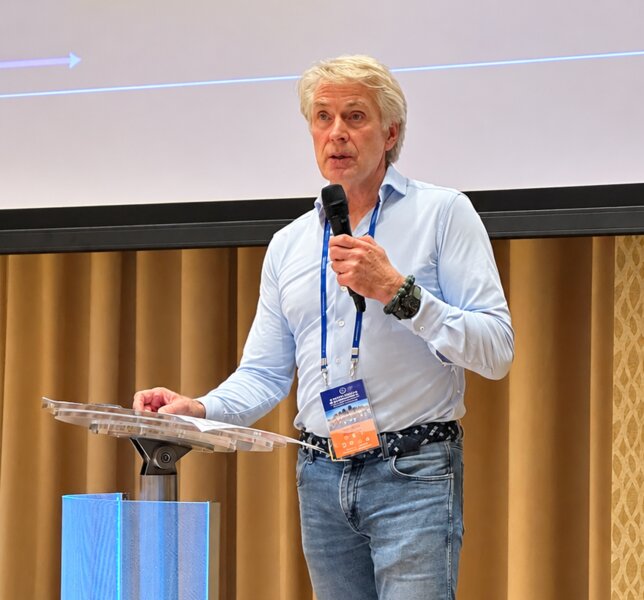
How do we stay vital and active throughout our lives? A conversation with Alex Tiemes.
Anxiety and Trauma: When there is more to physical symptoms than meets the eye
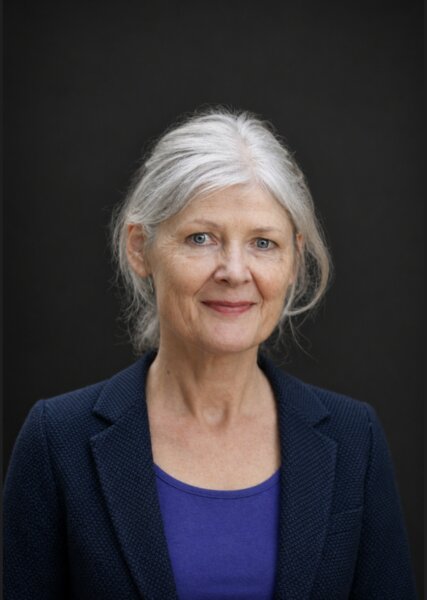
Why is self-cultivation relevant for an acupuncturist? A conversation with Dianne Sommers.
‘Self-cultivation is not so much about getting more out of yourself, but about getting out of your own way.’
During Acupuncture Awareness Week 2026, the central theme is Living a Vital Life with Acupuncture. We highlight how acupuncture, from the perspective of Chinese medicine, can support health and well-being throughout the different stages of life.
As part of the week’s activities, Dianne Sommers, philosopher, acupuncturist and physiotherapist, will present a webinar for NVA-members on self-cultivation and personal development as an acupuncturist. Dianne studied Classical Chinese at the Institute of Sinology in Leiden and is the author of several books, including De Chinese fascinatie voor de geest (The Chinese Fascination with the Mind), in which she translated a classical text on inner cultivation and self-development. She has also published several books on auriculotherapy and is an active lecturer and speaker in the fields of acupuncture, philosophy and Eastern healing traditions.
But what exactly does self-cultivation mean, and what can we learn about it from the classical Chinese tradition? We asked Dianne to share her views and experiences.
What exactly is self-cultivation, and why do you believe it is relevant to acupuncturists?
Dianne: In the classical Chinese tradition, self-cultivation is a broad concept. It is not simply about inner development, but about cultivating the whole person. This includes how you care for your body, regulate your emotions and attention, refine your behaviour and relate to others. At its heart is the ability to become increasingly attuned to yourself and your surroundings. Part of this process involves recognising your own patterns, expectations, insecurities and preferences, so that they do not unnecessarily interfere with what happens in the treatment room.
It is not about constantly working on yourself or continually striving to become a better version of yourself. Self-cultivation is more about nurturing, refining and attuning yourself to your own nature. This is reflected, among other things, in the Neijing. This classical text addresses not only illness, but also the way we live: how we balance activity and rest, respond to the seasons, and approach emotions, nutrition, sleep and sexuality. Living in harmony with these aspects supports the natural course of life.
As an acupuncturist, you do not treat patients through knowledge or techniques alone. You always bring yourself and your own state of being into the treatment room. Whether you are hurried or calm, how quickly you draw conclusions and how well you listen all influence what you perceive. Self-cultivation helps you avoid jumping to conclusions and instead truly observe what is happening with the patient. It is not so much about getting more out of yourself, but about getting out of your own way.
Can you give an example of how an acupuncturist’s personal development can influence the way they perceive or listen to a patient?
Dianne: A simple example is the urge to find a solution quickly. As a newly qualified acupuncturist, you may be inclined to look for familiar patterns during a consultation and immediately start thinking about how to address them. This is perfectly natural and part of the learning process.
But as you develop, it becomes easier to leave a situation open for a little longer. You feel less pressure to reach an immediate conclusion and become more comfortable with the fact that some things are not yet entirely clear.
For example, someone may tell you that they feel exhausted. Your first thought might be that they are experiencing an energy deficiency. But if you listen more closely, you may discover that something else is going on. Perhaps a new stage of life calls for change, while the person is trying to hold on to the way they have always lived and functioned.
This also changes the question you ask. It is no longer simply: ‘How can I help this person regain their energy?’ but also: ‘What is this stage of life asking of them, and how can I support them in adapting to it?’
Through your own development, you learn not to interpret situations too quickly through the lens of your own assumptions. This creates more space for what is actually happening in the life of the individual sitting in front of you.
What can the classical Chinese tradition teach us about developing ourselves as acupuncturists?
Dianne: Classical Chinese medicine places considerable emphasis on the development of the practitioner. The highest level is described as the ‘superior physician’ (shang yi). This involves much more than medical knowledge and technical skills. Personal and spiritual development are equally important. After all, an acupuncturist brings not only professional expertise to a consultation, but also their whole self as a human being.
The classical texts emphasise that practitioners should work with compassion and inner calm. Every patient deserves the same care and dedication, regardless of age or background. Professional expertise alone is therefore not enough. Self-awareness and the ability to approach others with an open mind are also essential.
This perspective remains relevant today. High-quality treatment requires not only knowledge and technical skills, but above all attentiveness and the ability to attune yourself to the person sitting opposite you. In this way, medicine becomes more than the application of individual techniques: it becomes a practice of the dao, the Way that gives direction to life.
What has your own development as an acupuncturist taught you about your interactions with patients?
Dianne: I have come to realise that good treatment depends far less on knowledge and technique alone than I once believed. Listening, observing and genuinely allowing space are often at least as important as the intervention itself. Over time, I have therefore become less focused solely on the complaint or the underlying pattern.
I have learned that it is not enough to approach knowledge as something external to yourself; you need to come to know it through your own body. You only truly learn how to ‘do’ by continually reflecting on your own physical and mental state. In this way, theoretical insights gradually become part of your own way of being. Bridging the gap between knowing and doing requires an ongoing process of personal development.
As the years go by, you gain a clearer understanding of your abilities and the treatment options available to you. But that does not necessarily mean that the therapeutic approach you have in mind is the most appropriate one for the person in front of you at that particular moment. For me, that is the essence of therapeutic maturity: not only knowing what you can
do, but also developing a better sense of what is truly needed — and sometimes, just as importantly, what is better left undone.
Discover More During Acupuncture Awareness Week
What does it mean to live a vital and healthy life, and what role can acupuncture play in supporting this? During Acupuncture Awareness Week, discover more about the perspective of Chinese medicine on health and well-being throughout the different stages of life.
